Muay Thaiอ่าน 5 นาที
The Story of Chiang Mai Boxing Stadium
Built to Find Champions: the Story of Chiang Mai Boxing Stadium
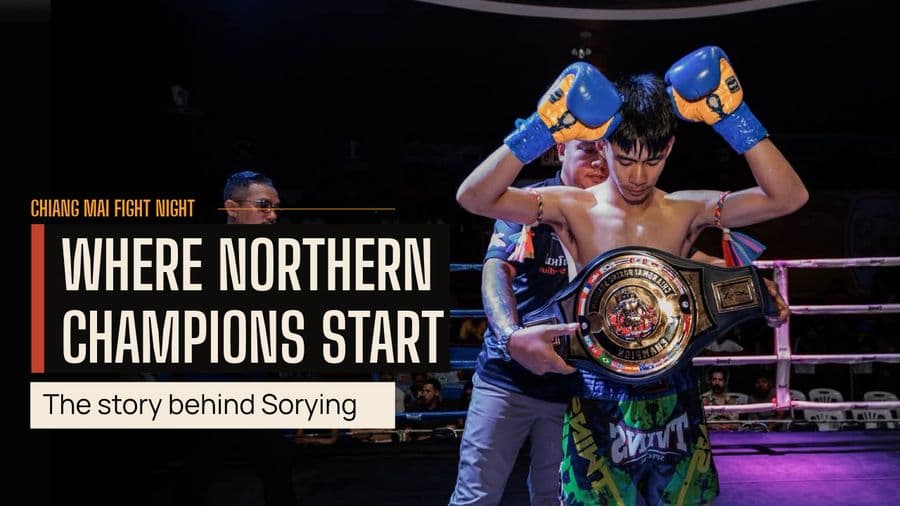
Chiang Mai Boxing Stadium isn't old, and it doesn't try to be. It was built by a fight camp with one job in mind: to give fighters from northern Thailand and its rural provinces a proper stage on the road to Bangkok's big stadiums. Locals, drivers and trainers call it Sorying, after the Sor.Yingcharoenkarnchang camp behind it.
In this guide
- Chiang Mai Boxing Stadium at a glance
- Who built it, and why?
- Where does the name Sorying come from?
- The fighters it has produced
- The stadium's own championship
- What this means on a fight night
- FAQs
- Worth remembering
Chiang Mai Boxing Stadium at a glance
Also known as | Sorying, Sorying Arena |
Founder | Sakon Chaichimplee, known as Pa Lor Harley |
Camp | Sor.Yingcharoenkarnchang, founded in 2011 |
Head trainer | Uthis Mangka |
Trainers corner at | Lumpinee and Rajadamnern, Bangkok |
Location | 177 Chang Phueak Soi 4, just north of the Old City |
Fight nights | Monday to Saturday, first bell 21:00 |
Who built it, and why?
Sakon Chaichimplee, known as Pa Lor Harley, founded the Sor.Yingcharoenkarnchang camp in 2011. Before that, he spent years in Muay Thai in central Thailand, helping launch fighters who went on to national success. When he moved to Chiang Mai, he saw a gap: talented fighters from the north and from rural provinces had few places to build a record before trying their luck in Bangkok.
So he built a stadium. The idea was simple. Give those fighters regular, well-matched professional bouts close to home, then help the best of them move on to Bangkok's big stadiums. The camp's head trainer, Uthis Mangka, prepares the fighters who carry its name. Fighters train one to one with experienced trainers, and when they're ready, the camp sends them to Bangkok, where its trainers work the corner at Lumpinee and Rajadamnern.
Where does the name Sorying come from?
Sorying is a short form of Sor.Yingcharoenkarnchang, the camp that runs the stadium. Fighters from the camp carry it as their surname in the ring, which is common in Muay Thai, where a fighter's ring name often includes their camp. If a driver or a trainer in Chiang Mai mentions Sorying, they mean Chiang Mai Boxing Stadium.
The fighters it has produced
Fighters from the camp have found success on national and international stages, among them Sornngern, Sorntong, Laopi, Paetsanlek, Kaichon, Maisangngoen, Maisangkhum and Korpai S.Yingcharoenkarnchang. The stadium still works the way it was planned: each season, it puts its most skilled fighters forward for bigger stages, including Poon Suea, Muay Thai 7 Colors, Kiatpetch Muay Thai, Super Champ, Muay Dee Withi Thai and cards at Lumpinee Stadium in Bangkok.
The stadium's own championship
Chiang Mai Boxing Stadium runs its own championship, with a stadium belt that gives local fighters a title to fight for before they head south. Titles are contested by weight class, so fighters of every size have a belt to aim for. For five years in a row, it has been the venue where fighters are selected for the Poon rounds, and it remains the only stadium in Chiang Mai to play that role. Being chosen year after year shows how far the stadium and the Sor.Yingcharoenkarnchang camp are trusted within Muay Thai.
What this means on a fight night
Chiang Mai has a long Muay Thai history, and the province is home to many of the camps that train foreign fighters. Chiang Mai Boxing Stadium adds something specific to that scene: a card built by a camp that is trying to find its next champion. When you watch a fight night here, the young fighters early on the card are the ones the camp hopes will one day headline in Bangkok.
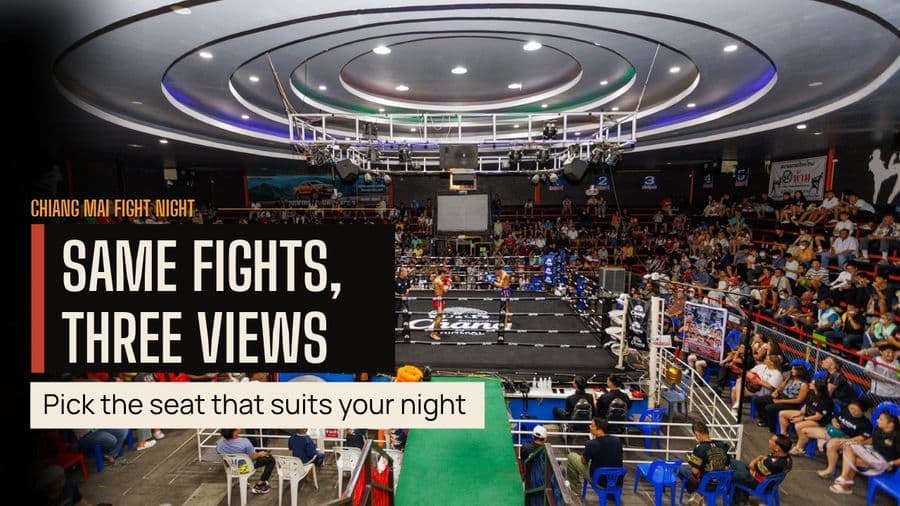
The stadium is fully indoor and air-conditioned, with fights Monday to Saturday from 21:00. Tickets are ฿600 for Grandstand, ฿1,000 for Ringside with one drink and ฿1,500 for VIP with free-flow drinks, and every ticket includes free hotel pickup inside the ring road and a drop-off after the last fight.
FAQs
How did Chiang Mai Boxing Stadium start?
It grew out of the Sor.Yingcharoenkarnchang camp, founded in 2011. After moving to Chiang Mai, founder Pa Lor Harley built the stadium to give northern fighters a stage of their own.
Who owns Chiang Mai Boxing Stadium?
It's run by the Sor.Yingcharoenkarnchang camp, founded by Sakon Chaichimplee, known as Pa Lor Harley.
Why is it called Sorying?
Sorying is short for Sor.Yingcharoenkarnchang, the camp behind the stadium. Locals and drivers use the short name.
Is Chiang Mai Boxing Stadium the oldest in Chiang Mai?
No. It's one of the city's younger stadiums. What sets it apart is its purpose: it was built by a camp to give northern fighters a path to Bangkok's big stadiums.
Have its fighters fought in Bangkok?
Yes. Several Sor.Yingcharoenkarnchang fighters have gone on to fight on cards at Lumpinee Stadium in Bangkok.
Worth remembering
- Chiang Mai Boxing Stadium, or Sorying, is run by the Sor.Yingcharoenkarnchang camp, founded in 2011.
- Its founder is Sakon Chaichimplee, known as Pa Lor Harley, and its head trainer is Uthis Mangka.
- It was built to give northern and rural fighters a stage on the way to Bangkok.
- It runs its own championship belt and is Chiang Mai's only selection venue for the Poon rounds, five years running.
- Fights run Monday to Saturday from 21:00, with tickets from ฿600.
Pick a fight night for your Chiang Mai Boxing Stadium : https://chiangmaiboxingstadium.ticket-official.com/events